This post may contain affiliate links. Please read our disclosure policy.



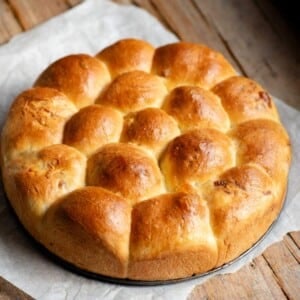
Danubio Salato is a traditional Neapolitan recipe. Soft, light and buttery brioche buns are stuffed with a mix of cheese and ham. Our recipe uses mozzarella, smoked scamorza, and prosciutto cotto. A delicious pull-apart bread made for sharing.
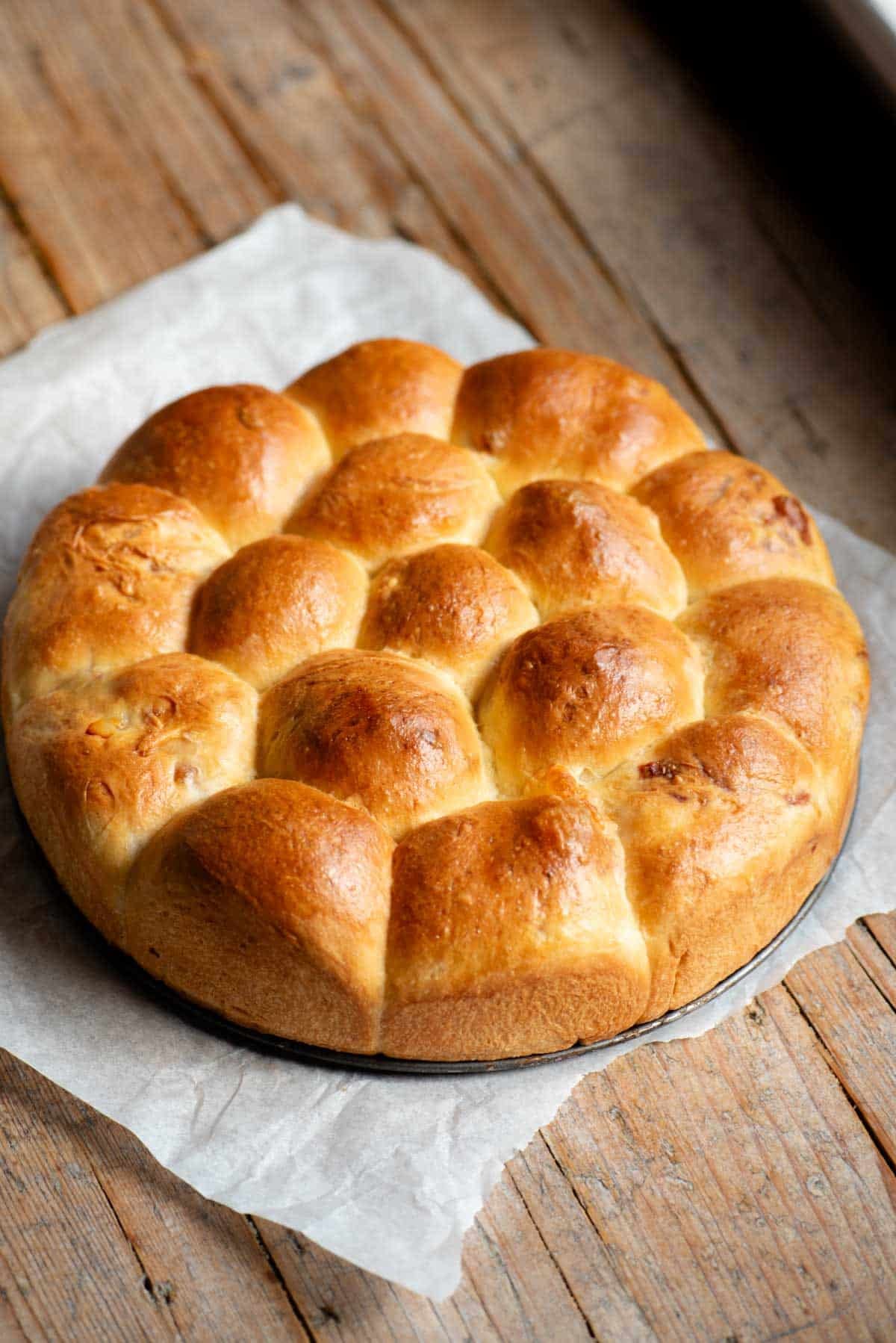
Recipe overview
- The recipe: a traditional Neapolitan pull-apart bread.
- Flavour and texture: soft, light and buttery rolls with a savoury ham and cheese filling.
- Prep and bake time: 1 hour 15 minutes.
- Proofing time: around 6 hours.
- Makes: 16 stuffed buns.
- Perfect for: sharing with a crowd, lunch, parties, picnics, aperitivo.
Danubio Salato is such a fun recipe to make. The recipe comes from Naples, although the exact origin is unclear.
When I was researching the history of this recipe, I found so many different stories and versions of its origin. It’s very similar to Austrian Buchteln, which are filled with a sweet plum jam, but how it ended up in Naples is another story. It’s thought to have been created by Neapolitan pastry chef Mario (or Giovanni) Scaturchio, who created his own savoury version after visiting Austria in the 1920s. Some say it was in honour of his aunt; others say his wife? We’ll never know for sure.
Nowadays, it’s popular in Naples around Easter, Christmas and for celebrations. Danubio is perfect for sharing, and you can have so much fun with the fillings (see more options and ideas on that below).
Ingredient notes
Pin this now to find it later
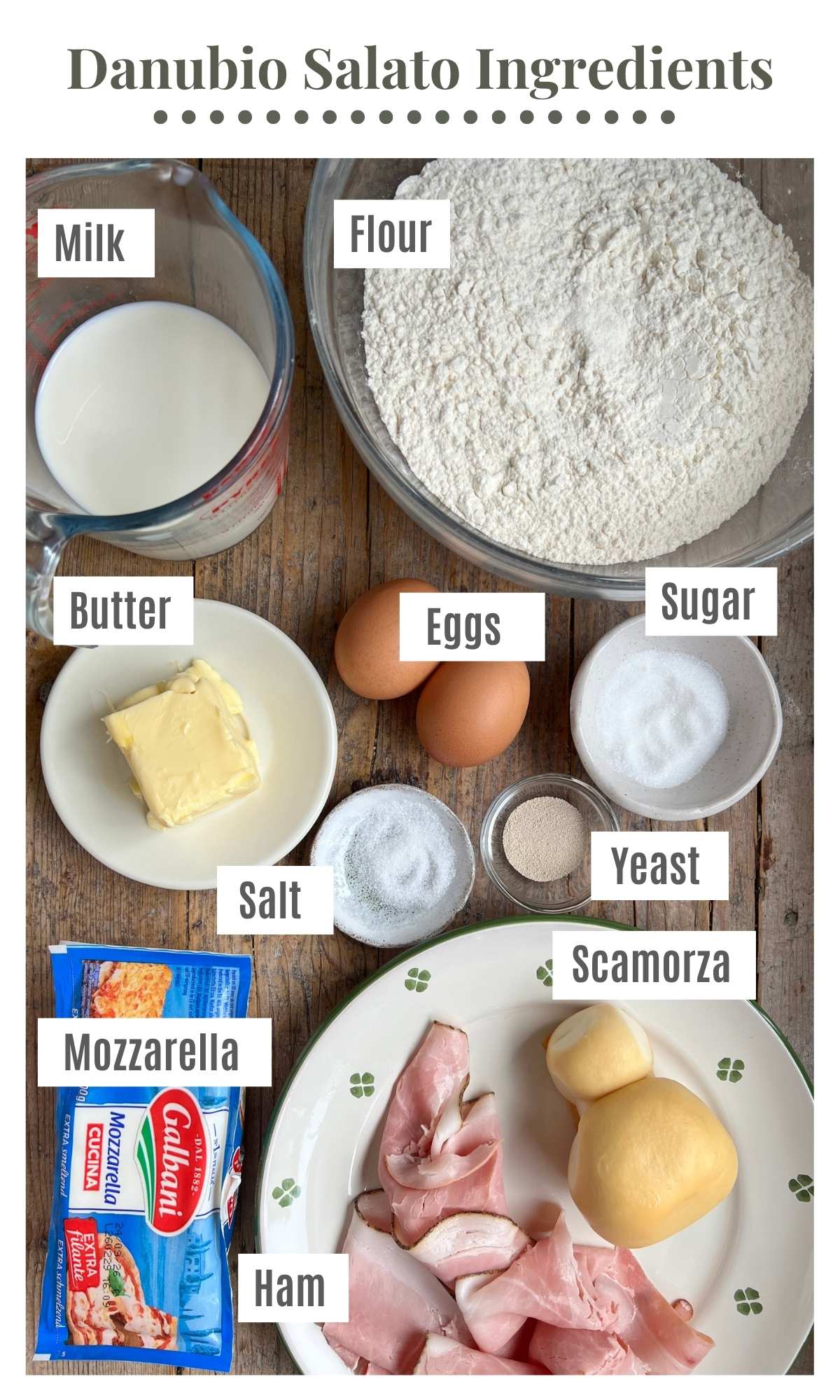
Pin It- Flour: Use strong bread flour if possible. I used Canadian bread flour, which is similar to Italian Manitoba flour. You can also use Italian 00 flour.
- Butter: Make sure it’s unsalted and at room temperature so it incorporates into the dough well.
- Eggs: You need 2 egg yolks for the dough and 1 whole egg for the egg wash before baking. You can use your 2 leftover egg whites to make Ricciarelli cookies or freeze them.
- Yeast: I use fast-action yeast, which can be added directly into the flour. Check if your yeast needs to be activated in liquid first (use some of the milk from the recipe to do this).
- Cheese and ham: we use mozzarella, smoked scamorza and prosciutto cotto (ham) for the filling. See more options below. I prefer using a low-moisture block of mozzarella rather than grated because it melts better, but use what you have available.
Filling variations
When it comes to cheese, especially mozzarella, make sure you use something with low moisture. Fresh mozzarella would be too wet for the filling. I’ve been testing this with pre-grated mozzarella but found that the best option was a low-moisture block of mozzarella like the Galbani version pictured in my ingredient photo.
- Meat: You can use ham, salami or any cured meats you like. Cooked sausage is also a great option.
- Cheese: Use a low-moisture cheese (avoid fresh mozzarella). Fontina, gorgonzola, provolone, smoked scamorza, taleggio are all great options. Use something that melts well, too.
- Veg: Sun-dried tomatoes (pat dry of excess oil), olives (either chopped or tapenade), wilted spinach or greens (make sure they have as little moisture as possible), mushrooms.
- Pesto: I’ve tested this with a combination of mozzarella and homemade basil pesto. It worked great, but my tip is to use a small amount of pesto, as it can be tricky to seal.
- Pizza filling: I haven’t tried this filling yet, but some recipes suggest adding passata (tomato puree) and mozzarella for a pizza-inspired filling.
Recipe tips for making Danubio Salato
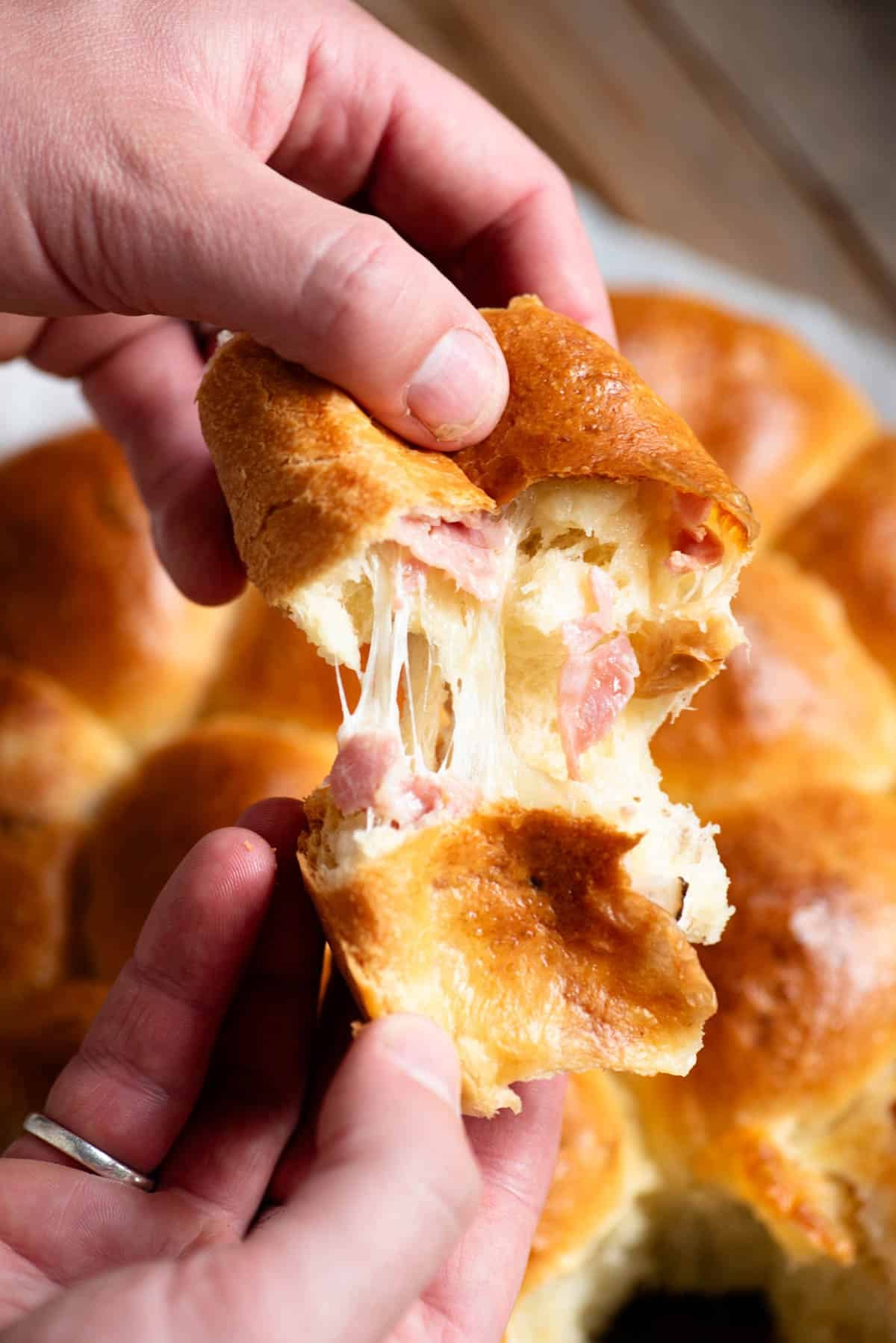
- Don’t overstuff: don’t overstuff the buns or they’ll be too difficult to seal and shape. The filling may also pierce the dough and leak out.
- Switch up the fillings: you can stuff each bun with a mix of different fillings, which is really fun for parties.
- Prep in advance: if you want to make this in advance, you can assemble the danubio, then refrigerate it overnight. Let it proof at room temperature for at least 2 hours before baking.
More Italian snacks to try
Antipasti
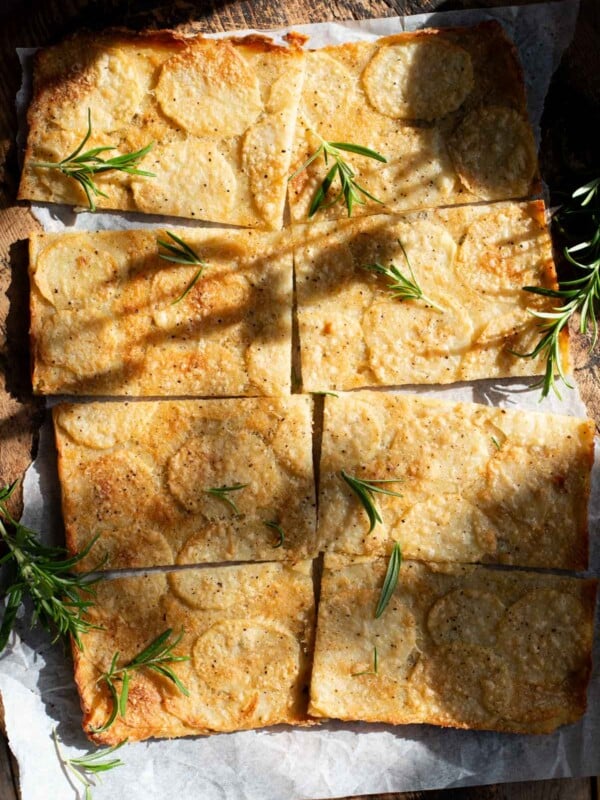
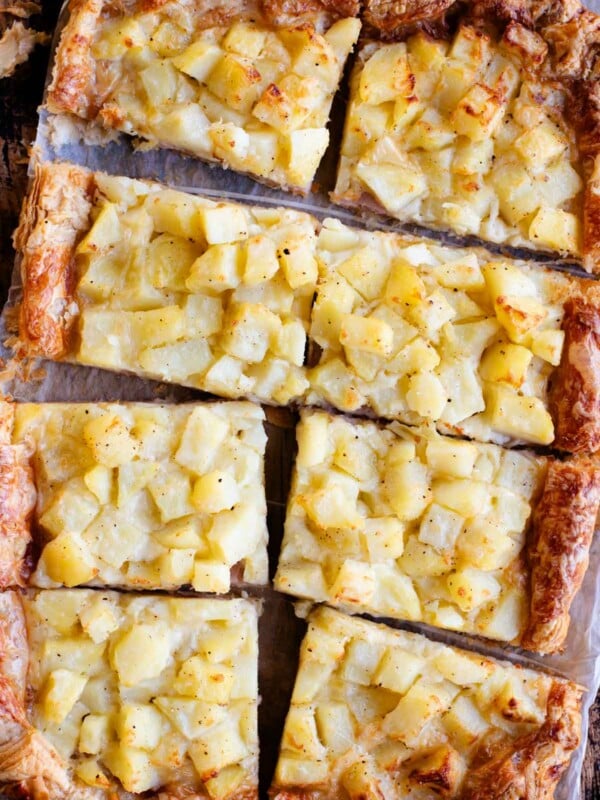
Cheesy Puff Pastry Potato Tart
Bread & Savory Bakes
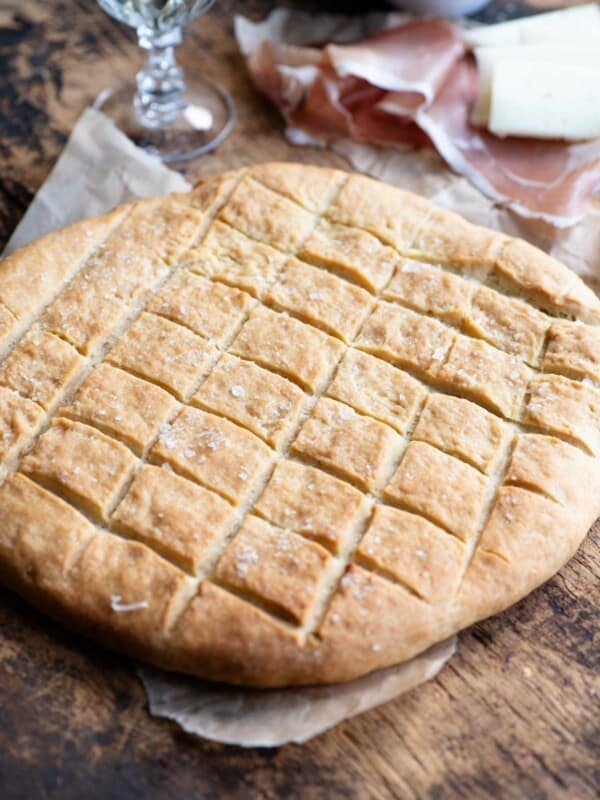
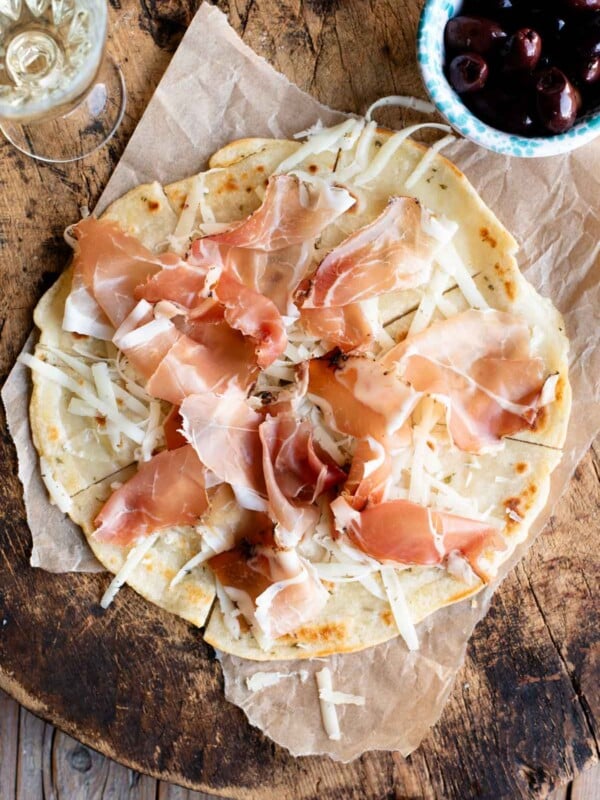
Brustengo (Umbrian Flatbread)

Antipasti
Gnocco Fritto (Italian Fried Dough)
Step By Step Photos Above
Most of our recipes come with step by step photos, helpful tips and tricks to make it perfectly first time and even video!
Danubio Salato (Neapolitan Stuffed Brioche Buns)
Equipment
- stand mixer with dough hook
- 10-inch (25cm) cake pan (preferably springform)
- large mixing bowl
- Plastic wrap (cling film)
Ingredients
For the brioche dough
- 500 g strong bread flour, (3 ½ cups plus 1 tablespoon)
- 1 teaspoon (4g) fast-action (instant) yeast, (see notes)
- 1 tablespoon sugar
- 2 egg yolks, at room temperature
- 250 ml (1 cup plus 1 tablespoon) milk
- 85 g (6 tablespoons) unsalted butter, at room temperature (plus extra for greasing)
- 1 teaspoon fine sea salt
For the filling
- 100 g (3.5oz) ham or salami, can use a mix
- 200 g (7oz) cheese, (We used a mix of low-moisture mozzarella and smoked scamorza)
Egg wash
- 1 egg
- 1 tablespoon whole milk
Instructions
To make the dough
- Gently warm the milk until it’s lukewarm.
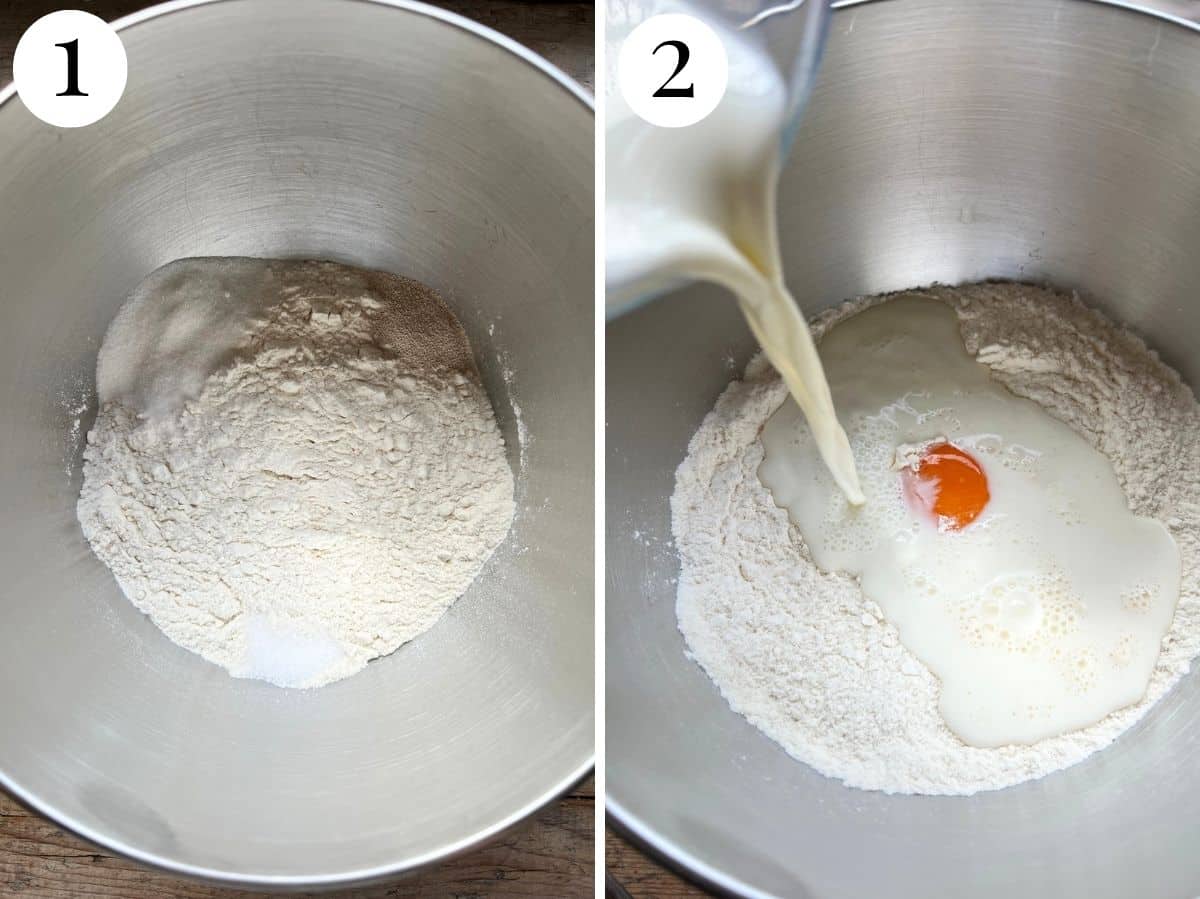
- Put the flour in the bowl of your stand mixer and add the yeast, sugar and salt (don’t place the yeast directly on top of the salt). Give it a quick mix with a fork.

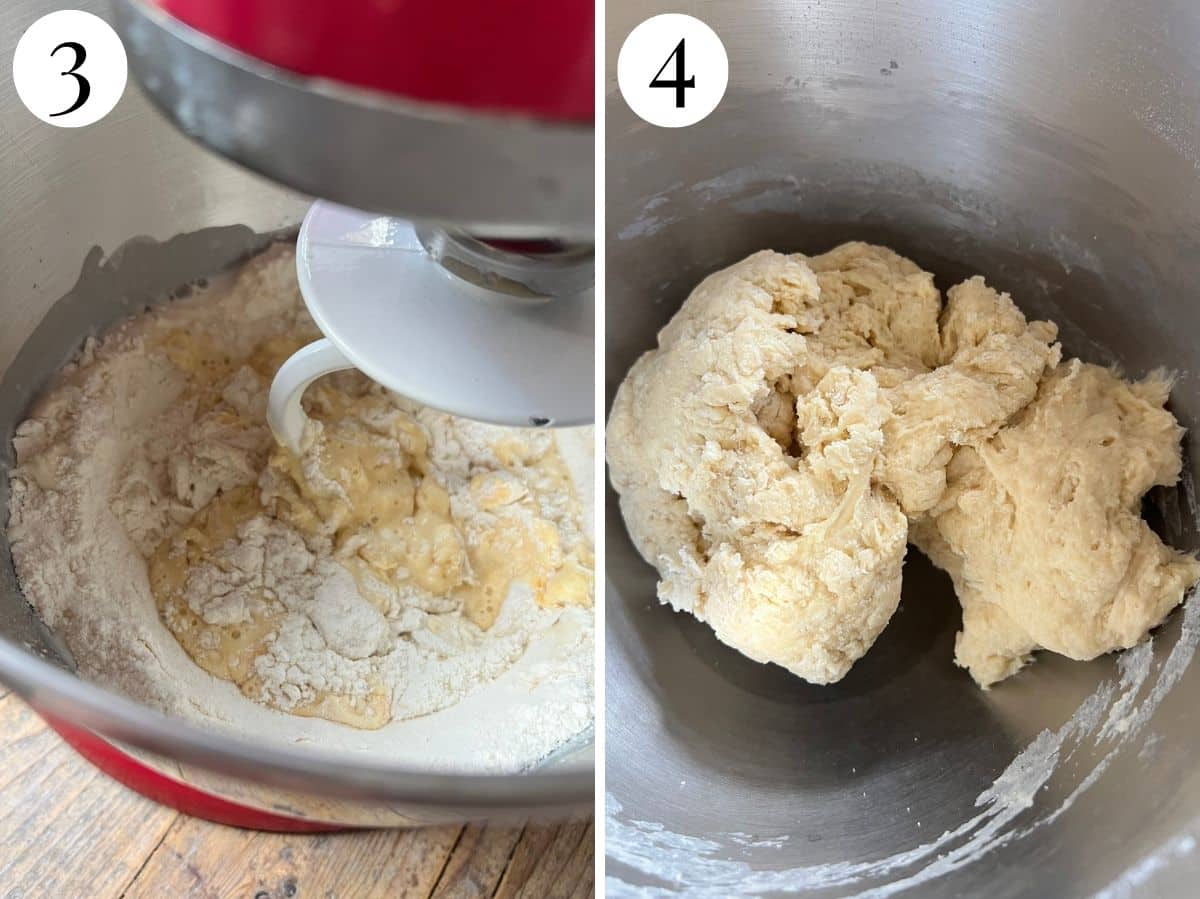
- Add the 2 egg yolks and lukewarm milk, then knead using the hook attachment on a medium speed until it forms a rough dough (about 5 minutes).
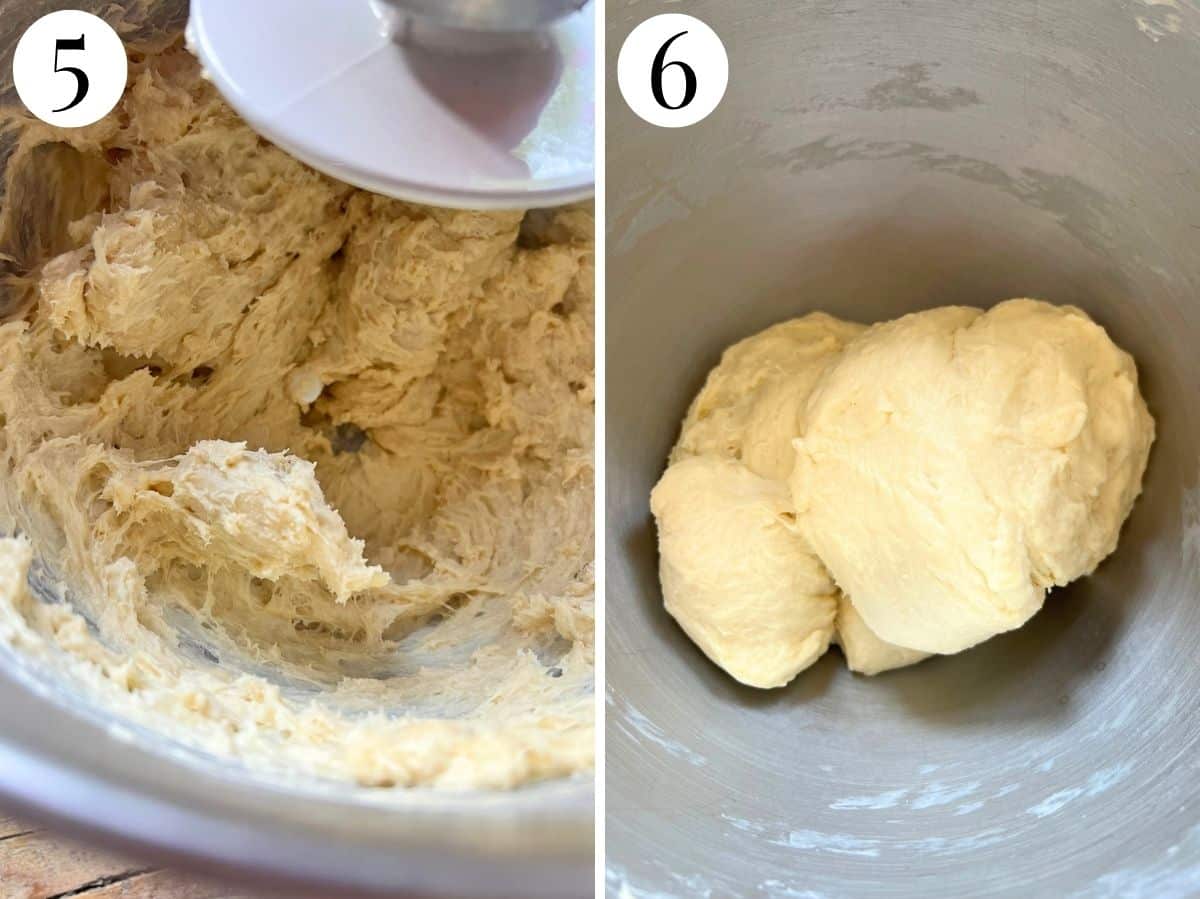
- Next, with the mixer on, add the butter a little at a time. Once all the butter is incorporated, knead on a medium speed for 10 minutes. The dough might look quite wet and sticky, but it comes together into a smooth and elastic dough after 10 minutes of kneading.
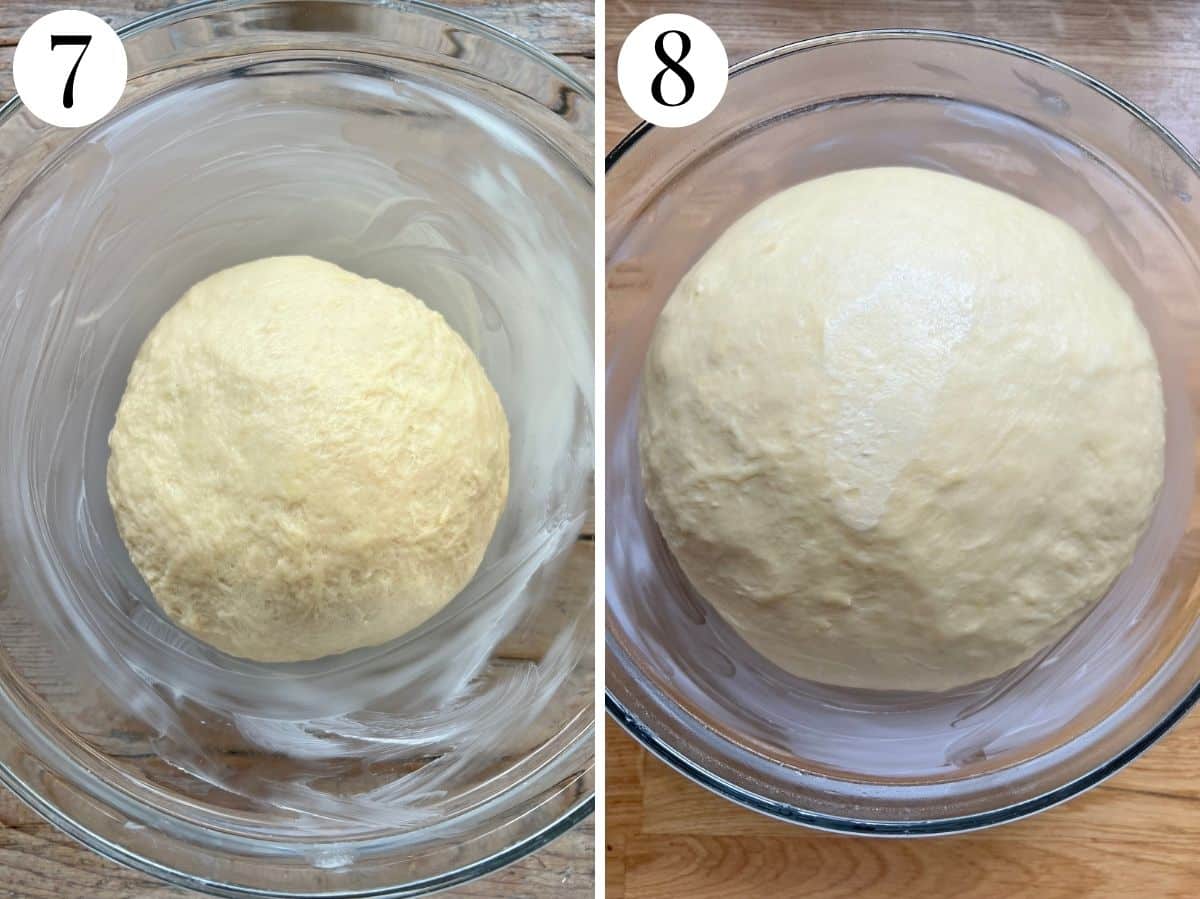
- Grease a mixing bowl with butter. Form the dough into a ball and place it in the mixing bowl. Cover with plastic wrap (cling film) and let it proof for 3 hours or until doubled in size.
How to form and stuff the buns
- Grease your springform cake tin with butter and set aside. Cut the mozzarella, ham and other cheeses you are using into small cubes; set aside.
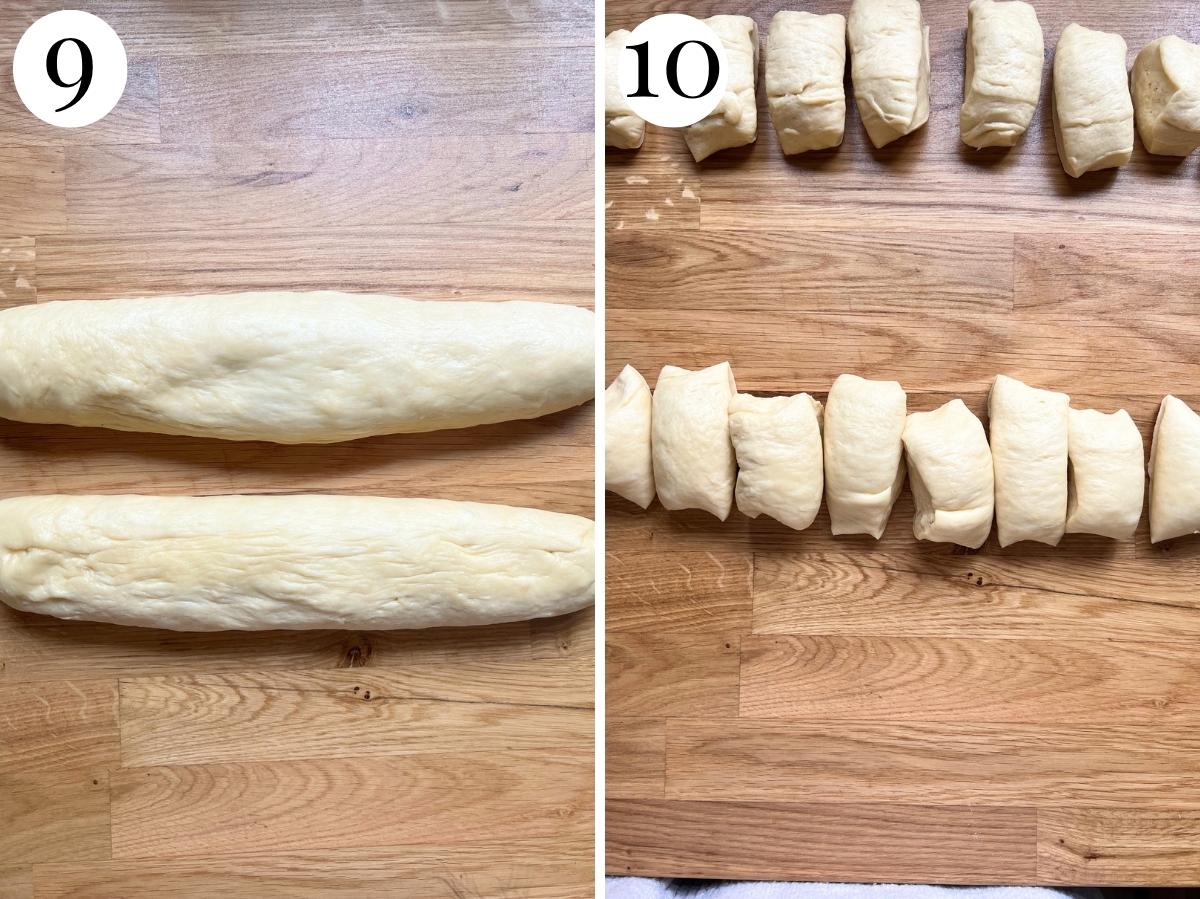
- Tip the dough from the bowl onto a clean work surface and cut it in half. Roll each half into logs around 12 inches in length. Cut each log into 8 equal pieces, giving you 16 pieces in total.
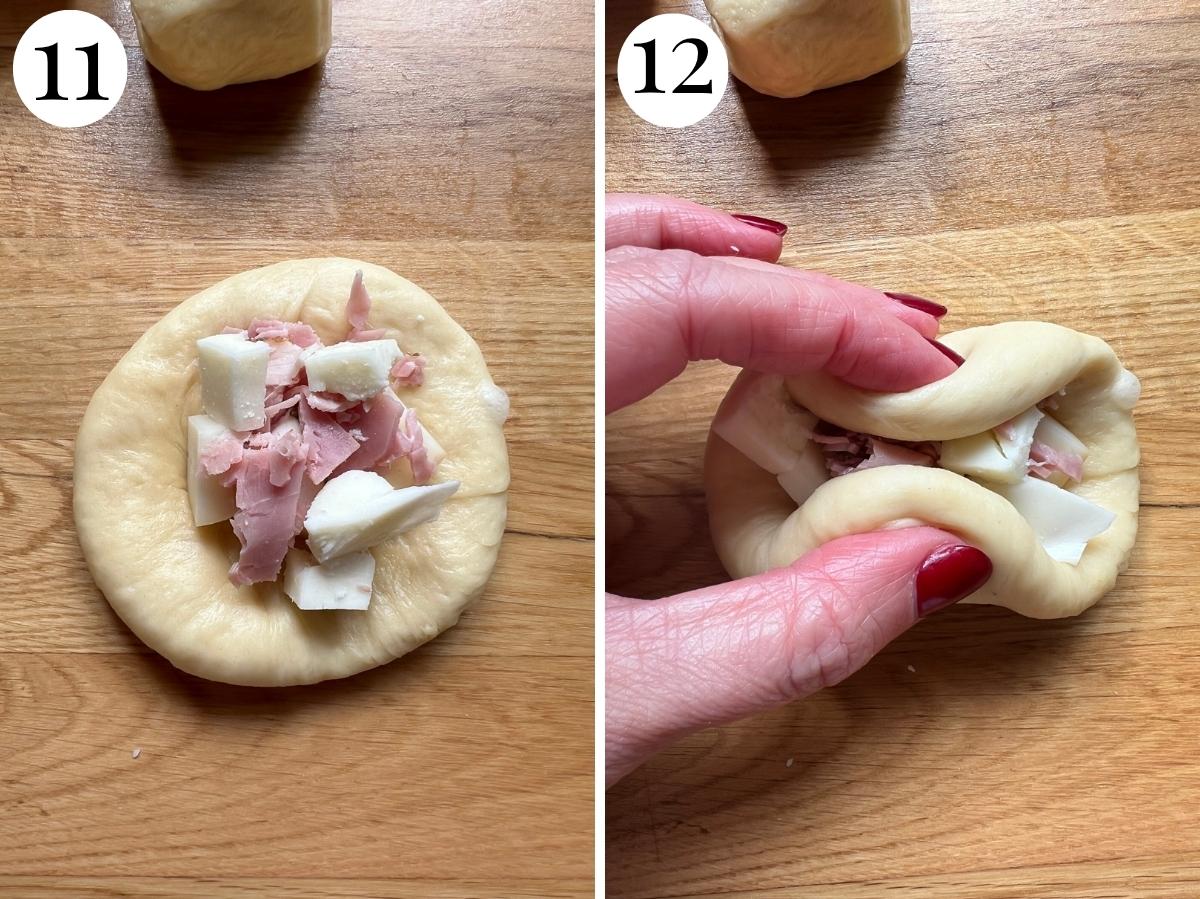
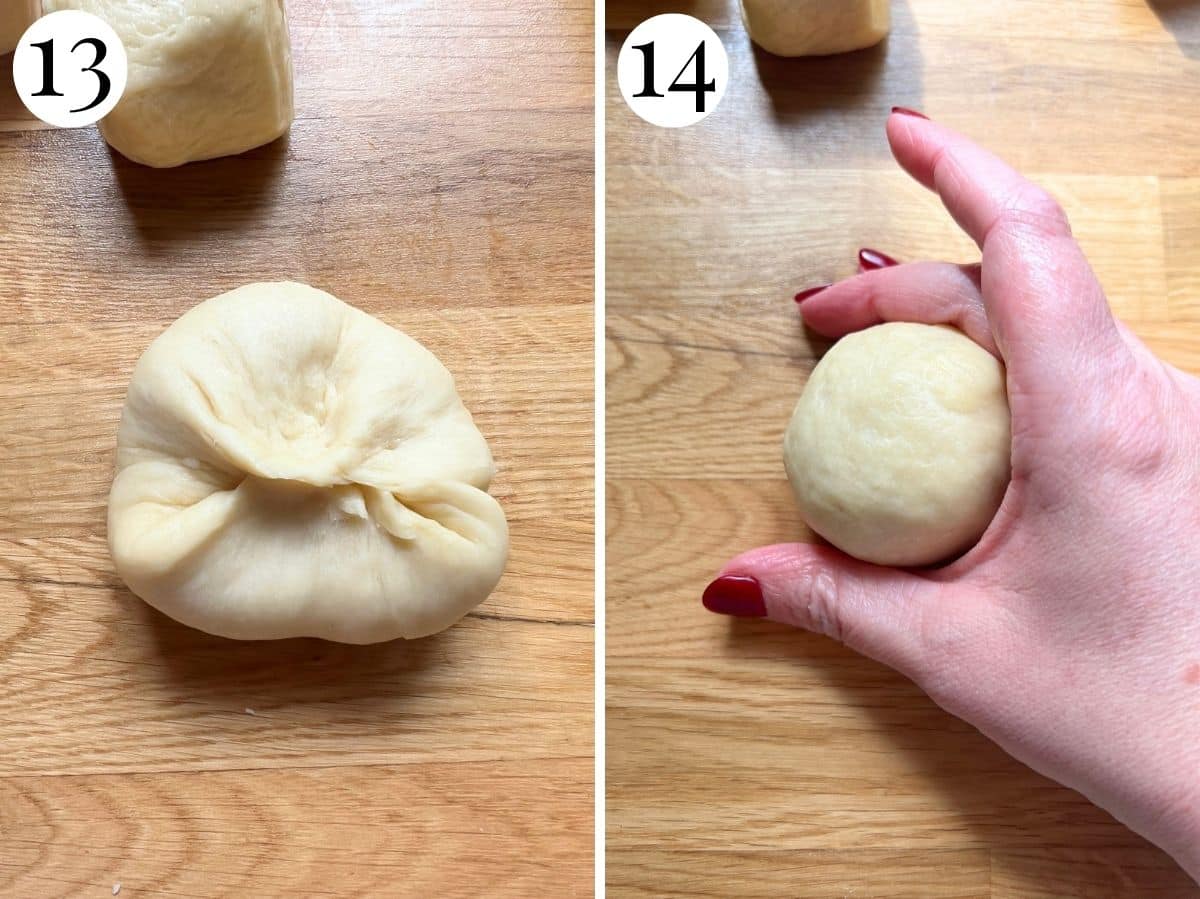
- Working with one piece of dough at a time, flatten it with your hand into a rough circle and fill it with some ham and cheese (don’t overstuff). Bring the edges together and pinch it at the top to seal the filling inside.
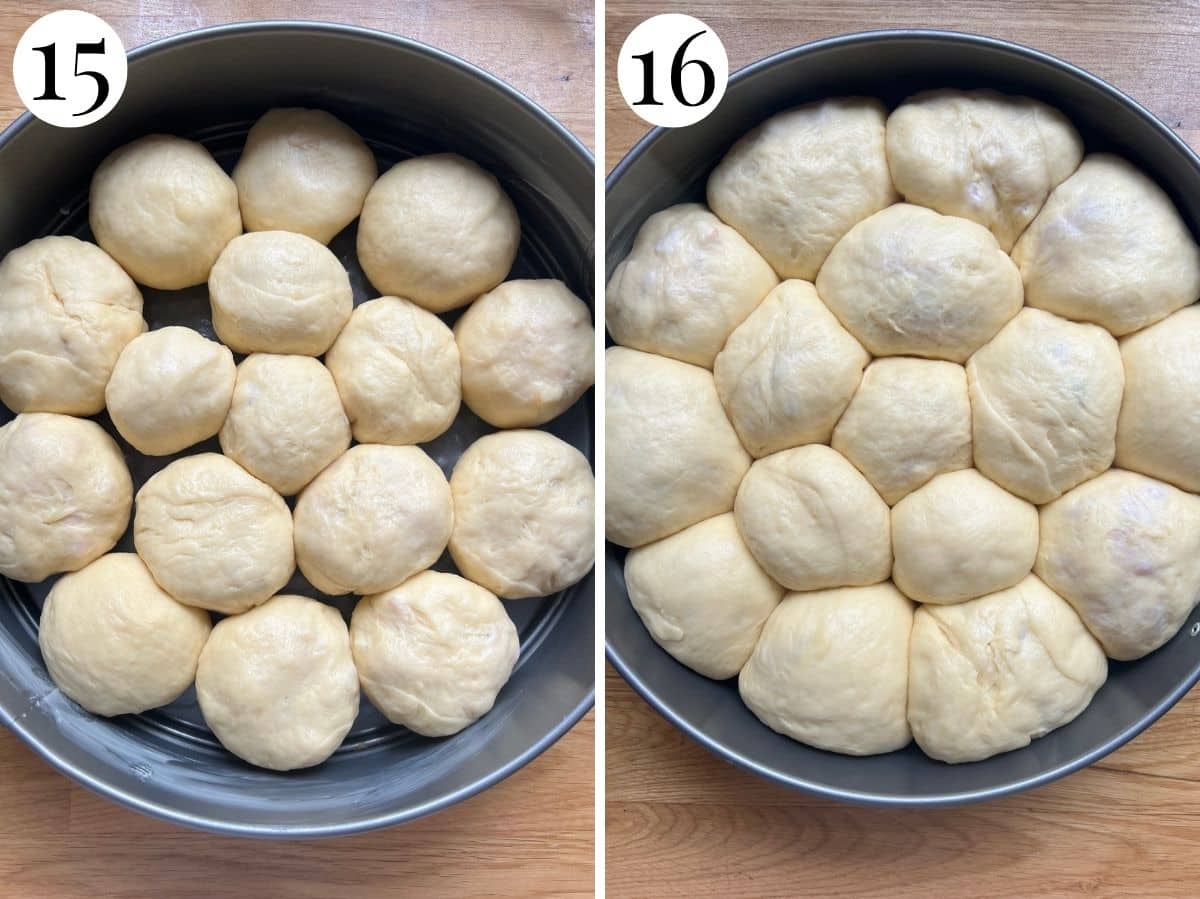
- Turn the dough over, so it’s seam side down on your worktop. Cup your hands around the dough and gently rotate it in a circular motion, keeping the edges tucked under to form a smooth ball, then place it in the cake tin.
- Repeat this with the rest of the dough until you have 16 filled buns in your cake tin. Cover with plastic wrap (cling film) and leave to proof until doubled in size (around 2-3 hours).
Bake
- Preheat your oven to 180℃/350℉ (fan or conventional).
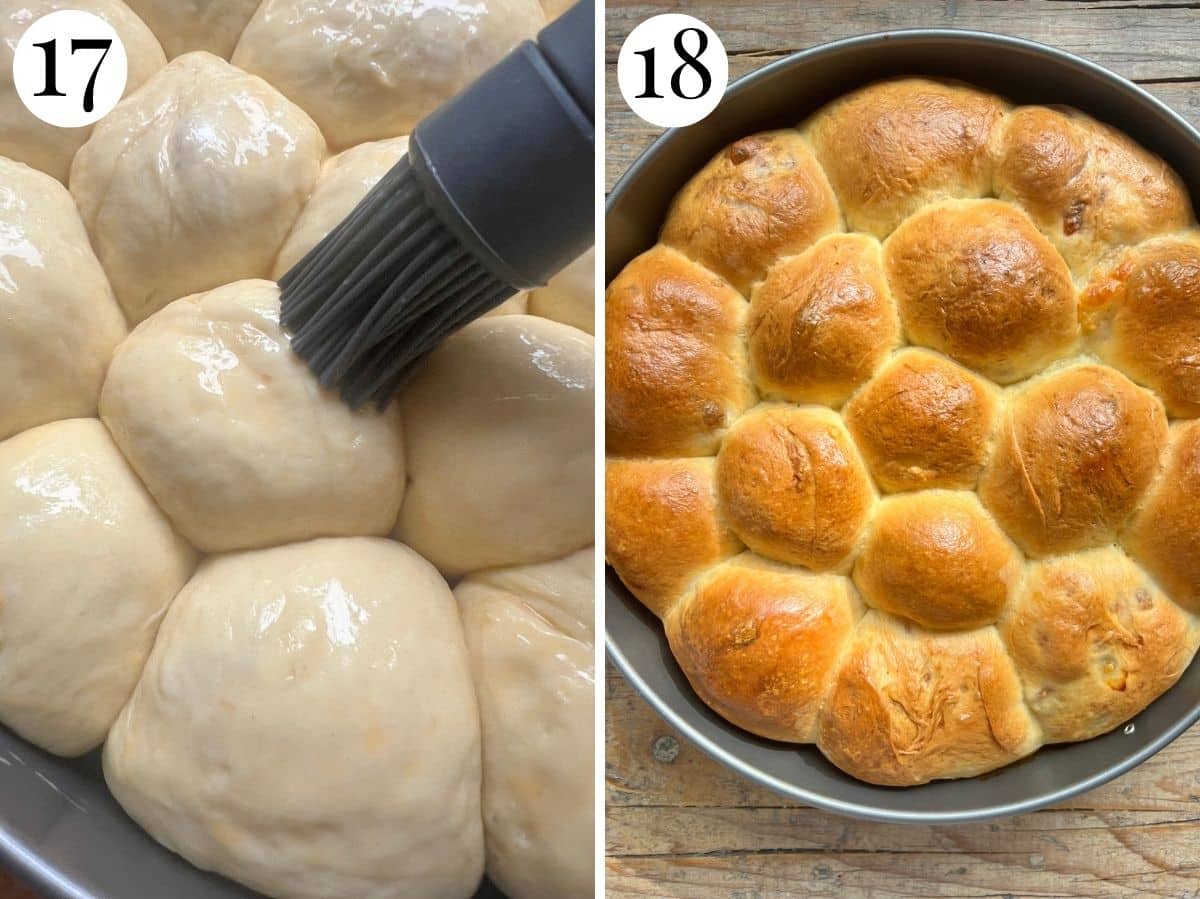
- Whisk the egg and milk together in a bowl, then lightly brush it over the brioche.
- Bake in the oven for 30 minutes if using a fan oven or 35-40 minutes if using a conventional oven, until golden brown on top (see my notes on this). Let it rest for at least 10 minutes before serving.
Notes
- Oven temperature: I found that baking the Danubio at 200C/400F in a static/conventional oven caused the Danubio to brown too quickly. Keep the temperature at 180C/350F if using a conventional oven, but bake it for 35-40 minutes until golden brown on top. If using a fan oven, bake at 180C/350F for 30 minutes.
- Cake pan size: a 10-inch cake pan works best to fit all the buns in. I have tested this recipe with a 9-inch cake pan, and it works well, but you will have around 3 buns leftover. You can proof and bake the extra buns in a separate cake pan/dish.
- Yeast: I use fast-action yeast that can be added directly into the flour. Check if your yeast needs to be activated first; you can do this in a little milk from the recipe.
Helpful Info for All Recipes
- I always use extra virgin olive oil in all of my recipes unless stated otherwise
- When I use canned or jarred tomatoes of any kind I always use Cirio or Mutti brands for the best results and flavour.
- All vegetables are medium sized unless stated otherwise
- All recipes are tested and developed using a fan (convection) oven
- Find out more about how nutrition is calculated.
- Check out our must have Italian Pantry Staples.
- You can also find all our Essential Kitchen Tools for Italian Cooking.
Nutrition
Nutrition information is automatically calculated, so should only be used as an approximation.