
This post may contain affiliate links. Please read our disclosure policy.
Torta Nua is a simple Italian breakfast cake made with a lemon sponge and filled with a delicious vanilla and lemon pastry cream. It’s soft, creamy and absolutely delicious!
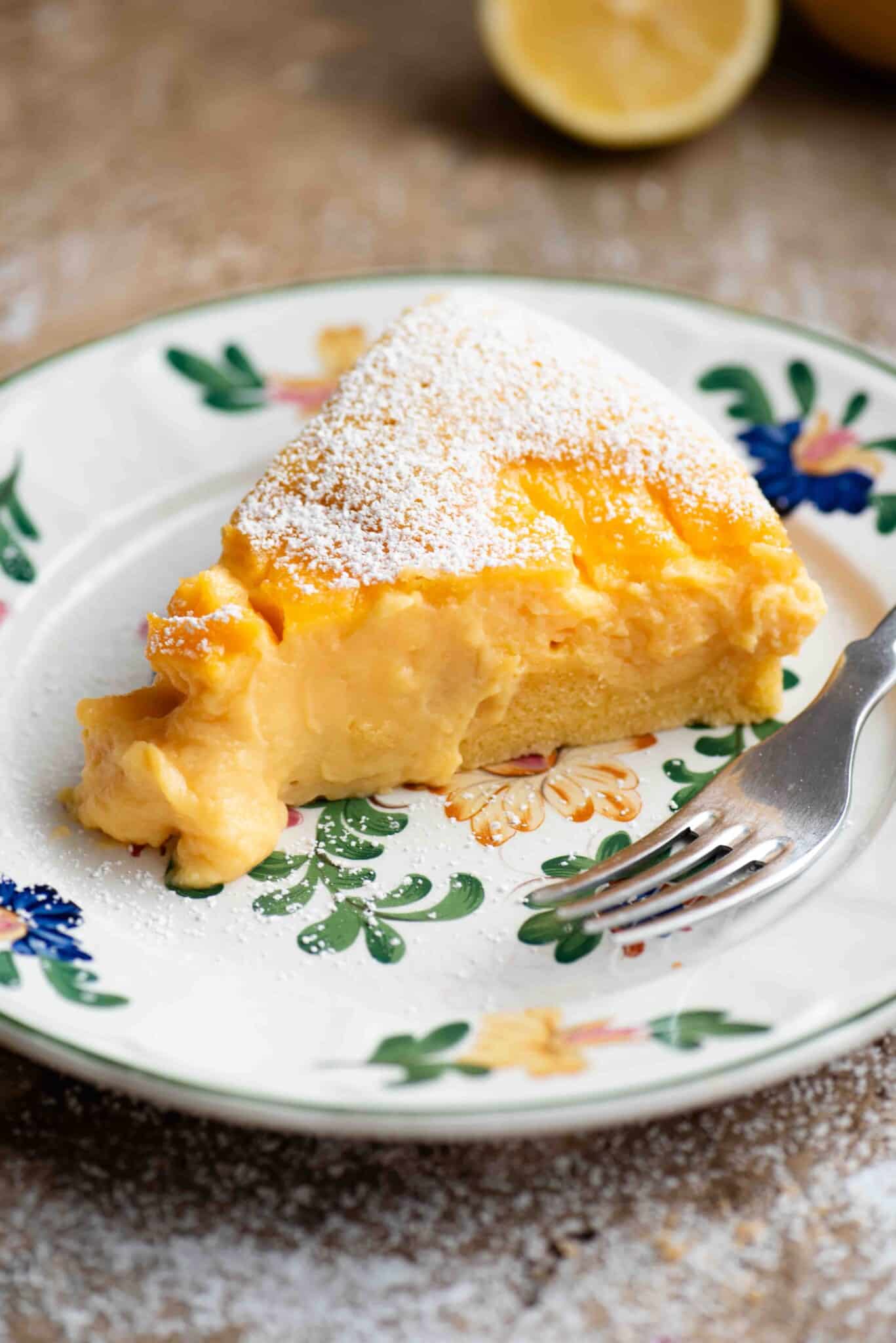
Torta Nua feels like one of those traditional, rustic cakes that have been around for centuries, but it’s actually a relatively modern dessert.
It became extremely popular online in the early 2010s thanks to Italian baking blogs and has remained popular ever since, with many variations including chocolate, Nutella and ricotta.
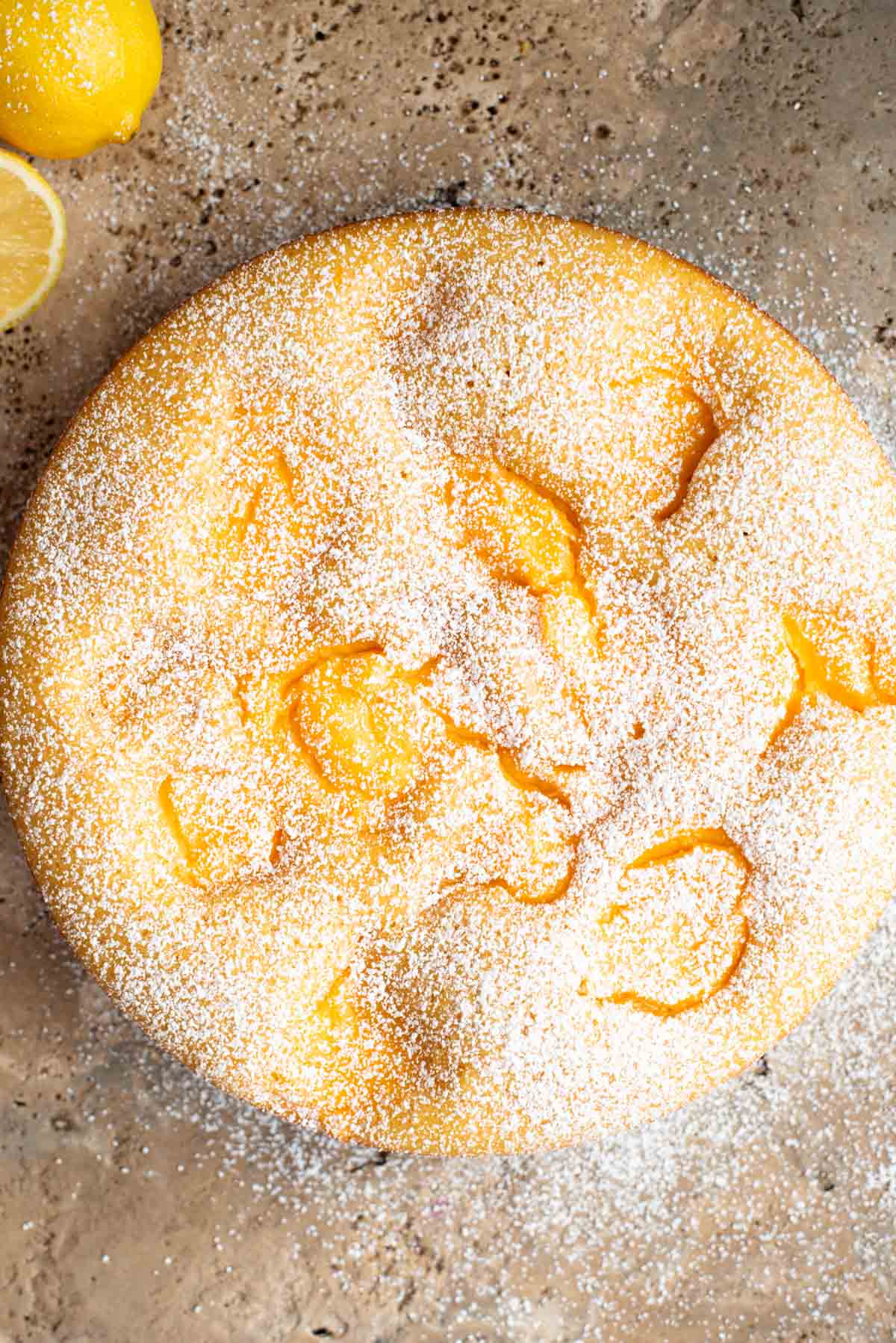
The cake itself is simple and very similar to an Italian breakfast cake flavoured with vanilla and lemon. Spoonfuls of lemony pastry cream are dolloped on top of the raw batter but remain super creamy and delicious once baked.
It’s truly delicious and a cake that I tested at least 7 times to get right. There are a few important tips when making torta nua that you MUST follow for success. I’ve detailed them all below so you can make this beauty without fail!
Ingredient notes
Pin this now to find it later
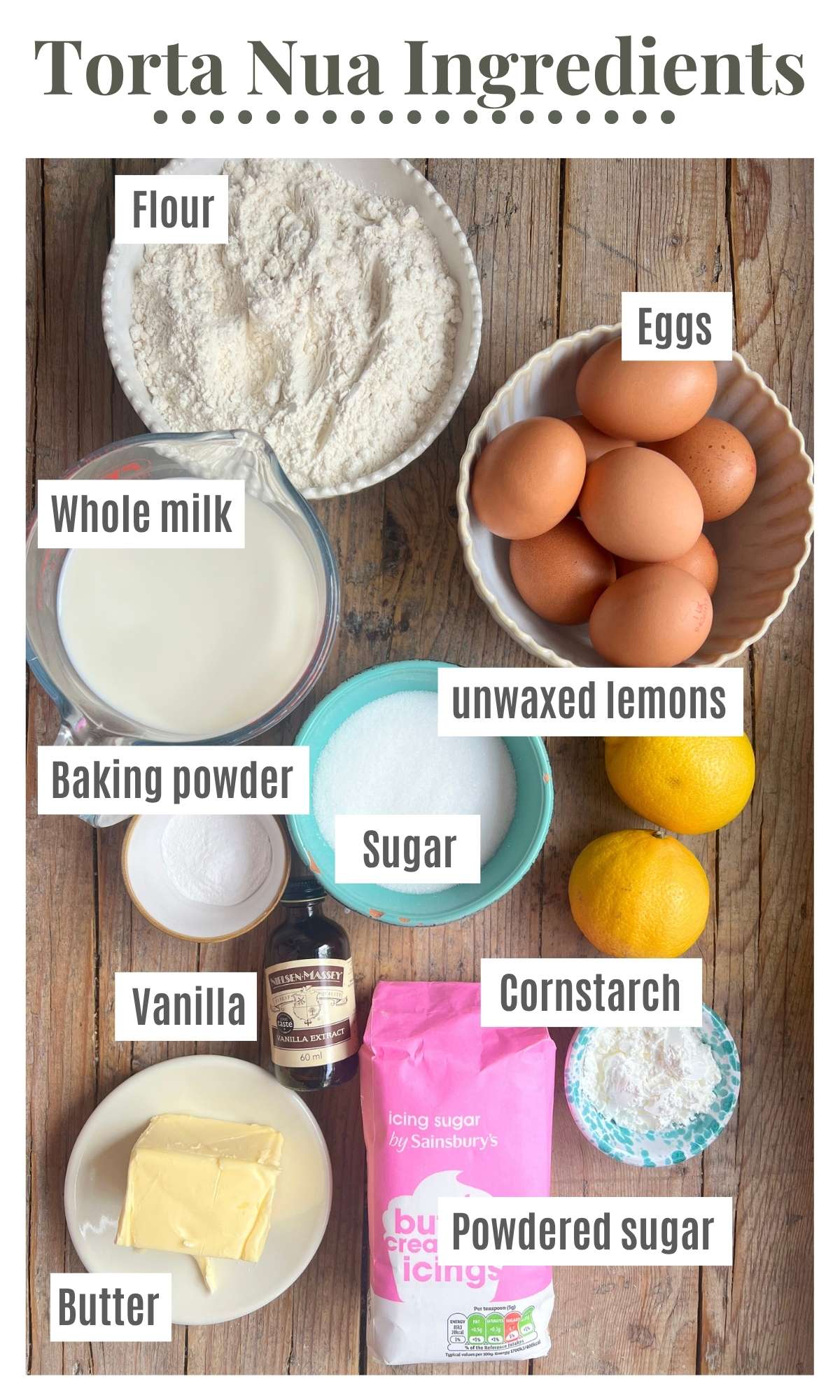
Pin It- Flour: I pretty much always use Italian 00 flour in my baking as it’s what’s commonly used in Italy and I can find it at every supermarket here. All-purpose or plain flour is also absolutely fine to use.
- Eggs: I used golden yolk eggs, which is why my pastry cream looks quite vibrant, but it’s not essential to use them. Regular egg yolks will give you a paler pastry cream, which is absolutely fine. See my tips below on what to do with leftover egg whites.
- Sugar: I use caster sugar (superfine) in most of my baking, but you can also use granulated sugar.
- Lemons: Make sure they are unwaxed, as we’re only using the peel.
- Vanilla: I use good quality vanilla extract, but you can also use vanilla bean paste or a vanilla bean instead.
- Whole milk: This is a must for a rich and creamy pastry cream. Don’t use a lower-fat milk.
My top recipe tips for making Torta Nua
Whip the batter well – this is a really important tip because the cake batter needs enough air and structure to hold the pastry cream. Whip the egg and sugar for at least 2 minutes at the start, then make sure the flour is properly mixed in and there are no lumps.
Line your cake pan – grease your cake pan with butter and line the bottom with parchment paper, even if it’s a non-stick pan.
Use the correct size pan – I’ve tested this cake using a 9-inch springform pan. I highly recommend this size for getting the perfect height on this cake. If you go smaller, you will likely not need all of the pastry cream, and the cake will need to be baked for longer.
You can freeze leftover egg whites until you need them or use them to make an egg white omelette. You can also use them to make my favourite Italian cookies (Ricciarelli), which are made with egg whites and almonds.
More Italian desserts to try
Italian Desserts
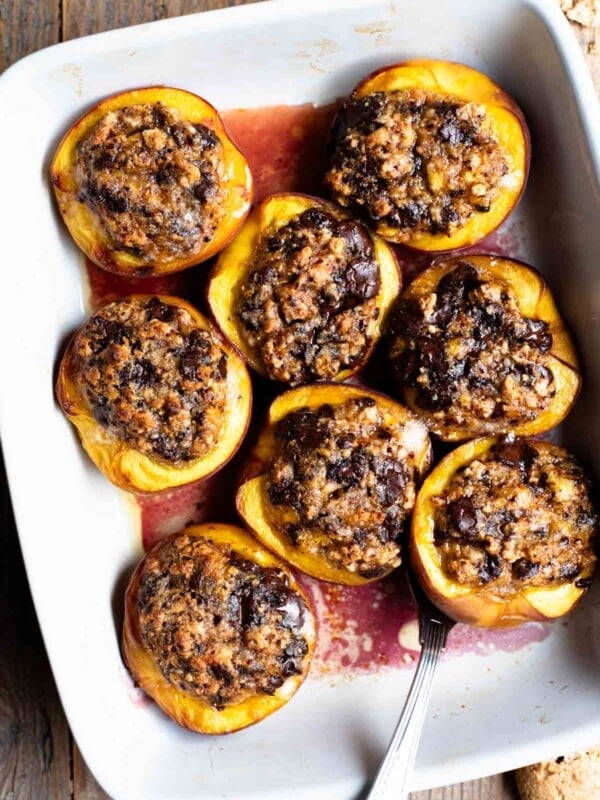
Italian Baked Peaches (Pesche Ripiene alla Piemontese)
Italian Desserts
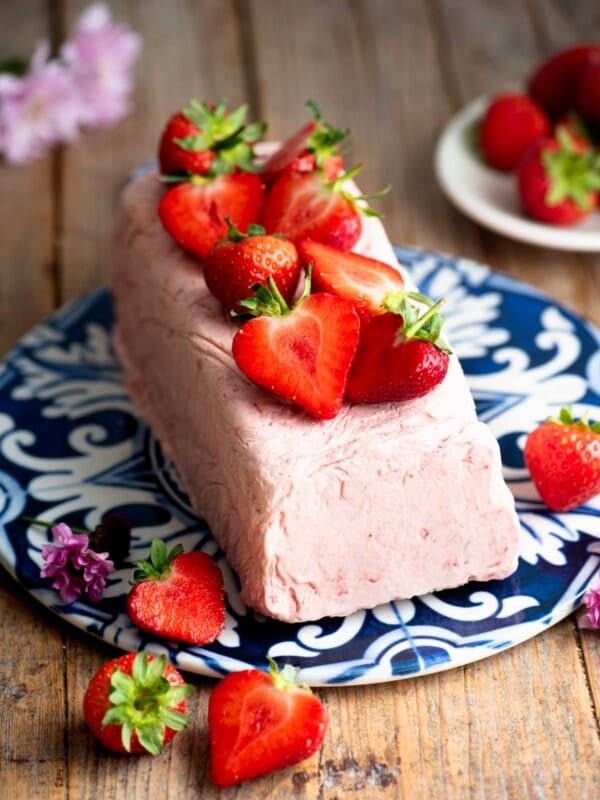
Strawberry Semifreddo with Strawberry Sauce
Italian Desserts
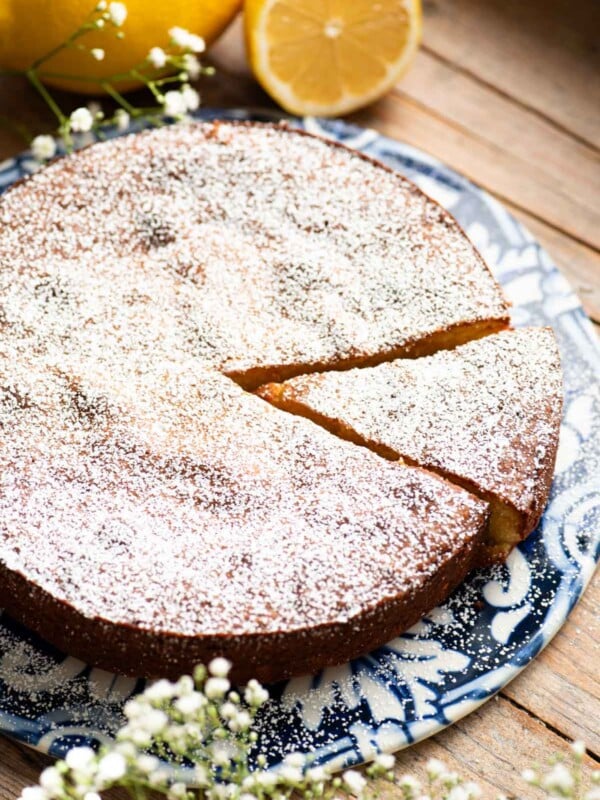
Torta Caprese Bianca (Lemon Caprese Cake)
Italian Desserts
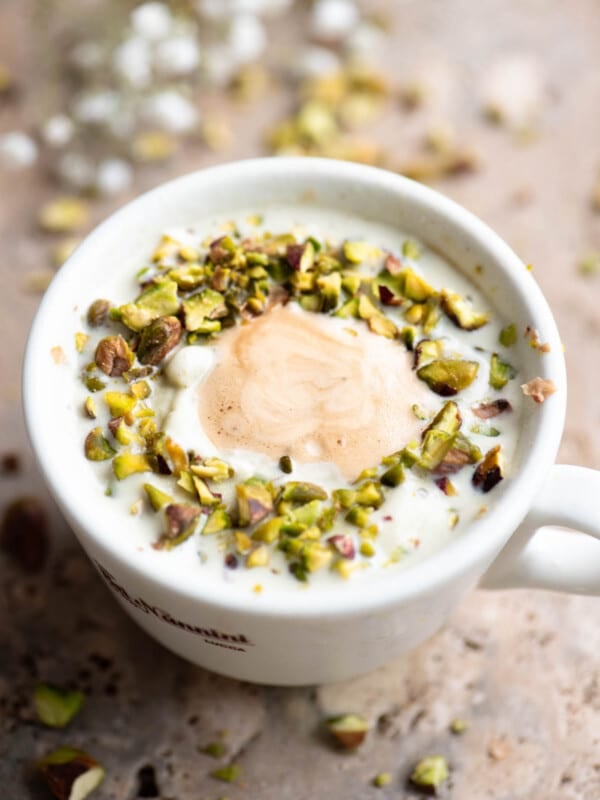
Pistachio Affogato
Step By Step Photos Above
Most of our recipes come with step by step photos, helpful tips and tricks to make it perfectly first time and even video!
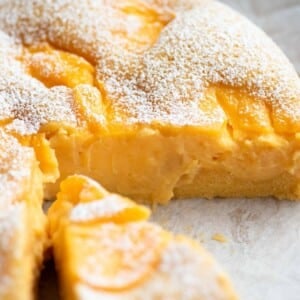
Torta Nua (Italian Cake with Pastry Cream)
Equipment
- 9-inch loose bottom springform cake pan
- Baking parchment
- Sieve
- Stand mixer or electric hand whisk
- Plastic wrap (cling film)
Ingredients
For the Crema pasticcera
- 3 large egg yolks, (I use golden yolks but this is not necessary)
- 355 ml (1.5 cups) whole milk
- Peel of 1 lemon
- 30 g (1/4 cup) cornstarch
- 50 g (1/4 cup) sugar
- 1 teaspoon vanilla extract
For the Cake
- 280 g (2 cups) Italian 00 flour, (can also use all-purpose flour)
- 115 g (1 stick) unsalted butter, melted
- 2 teaspoons baking powder
- 4 large eggs
- 180 g (3/4 cup plus 2 tablespoons) caster/superfine sugar, (can also use granulated)
- Zest of 1 lemon
- 120 ml (1/2 cup) whole milk
- Powdered/icing sugar, for dusting on top
Instructions
To make the pastry cream
- Peel the lemon in strips using a vegetable peeler and place it in a large saucepan with the milk and vanilla extract. Heat the milk until it just starts to simmer then turn off the heat immediately (photo 1).
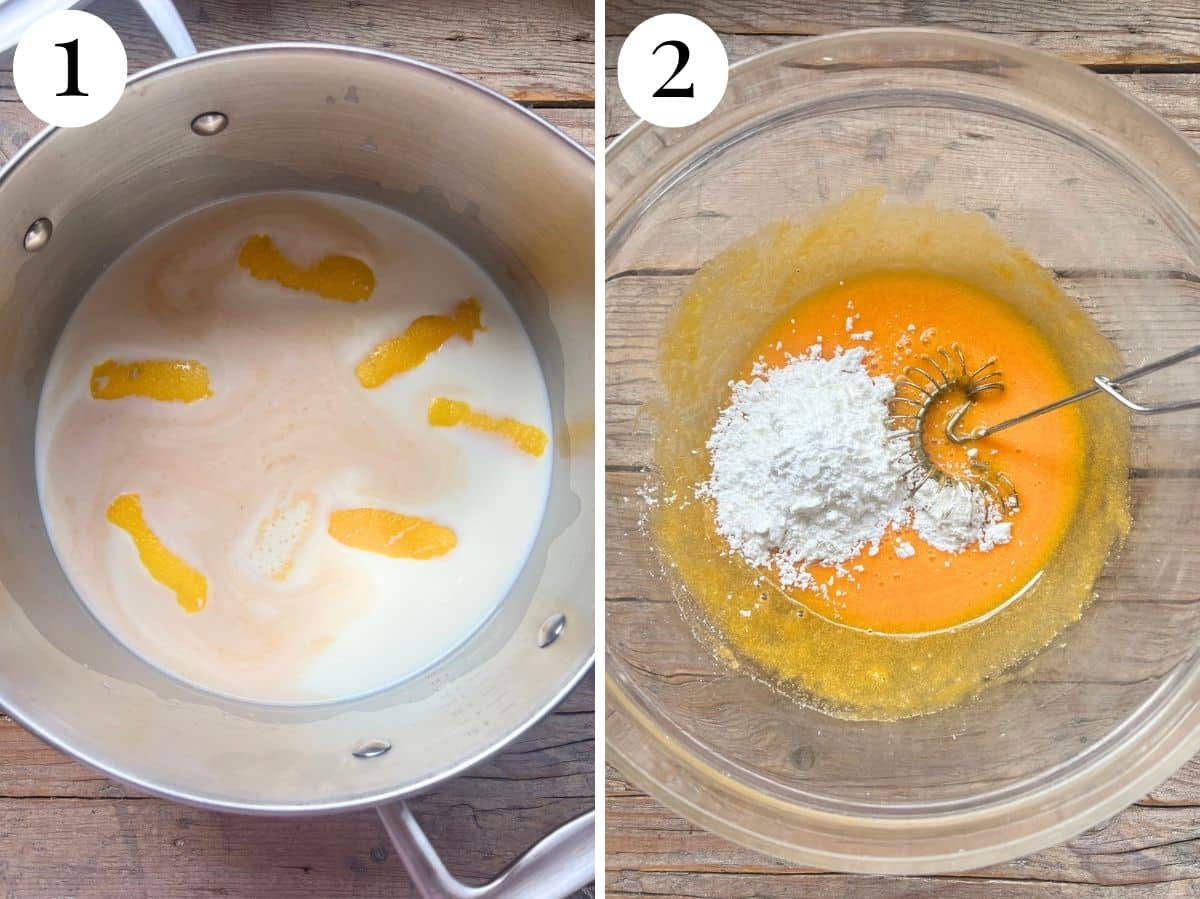
- Meanwhile, in a large bowl, combine the egg yolks, sugar and cornstarch and whisk until smooth and combined (photo 2).
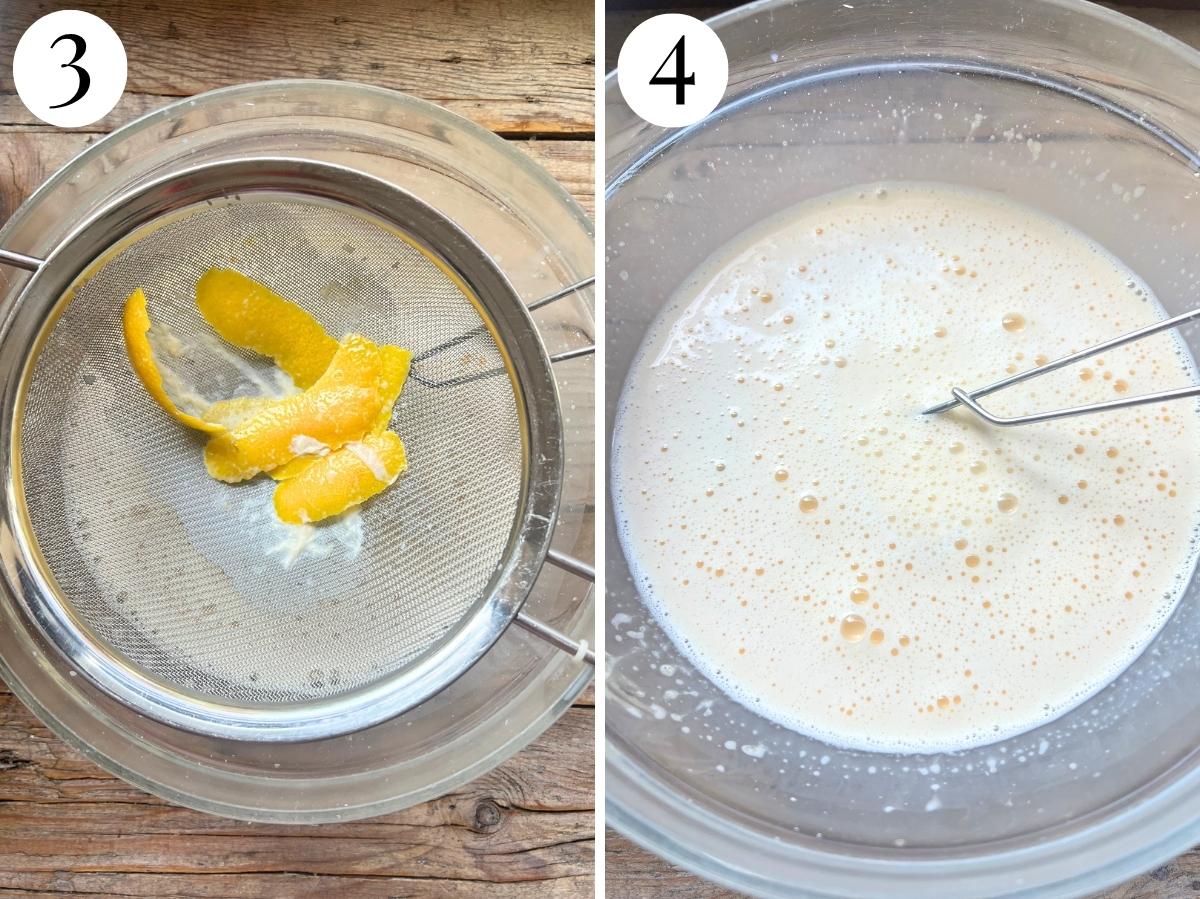
- Add a splash of the hot milk to the egg mixture and whisk it in. Place a sieve over the bowl and pour in the remaining milk, straining out the lemon peel. Give it a good whisk to avoid the eggs overcooking (photos 3 and 4).
- Pour the mixture back into the large saucepan you heated the milk in and heat on a medium-low heat until very thick. I use a wooden spoon until I can feel the pastry cream starting to thicken, then switch to a hand whisk to avoid any lumps.
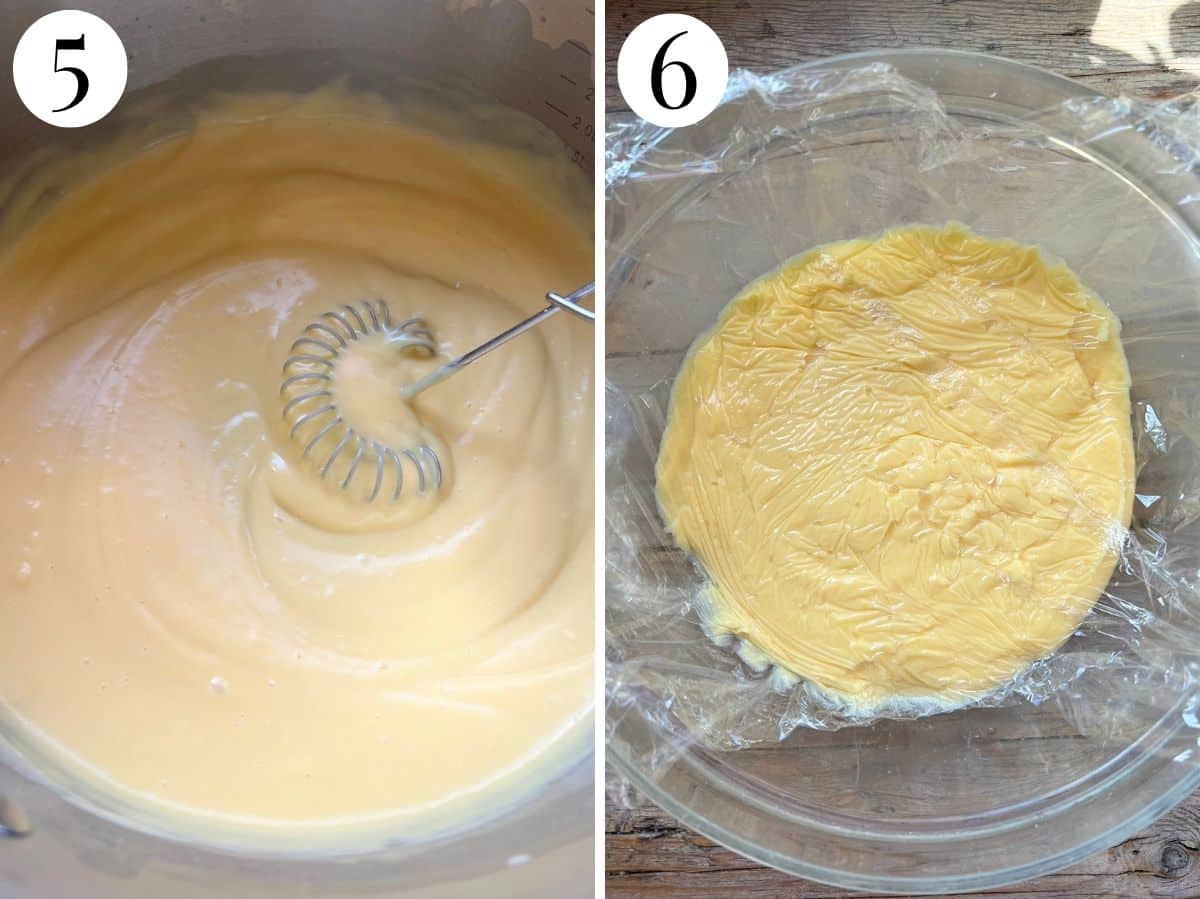
- Pour the pastry cream into a clean bowl and cover it with plastic wrap, directly on top of the cream to stop a skin from forming. Let it cool for 20-30 minutes (photos 5 and 6).
To make the cake
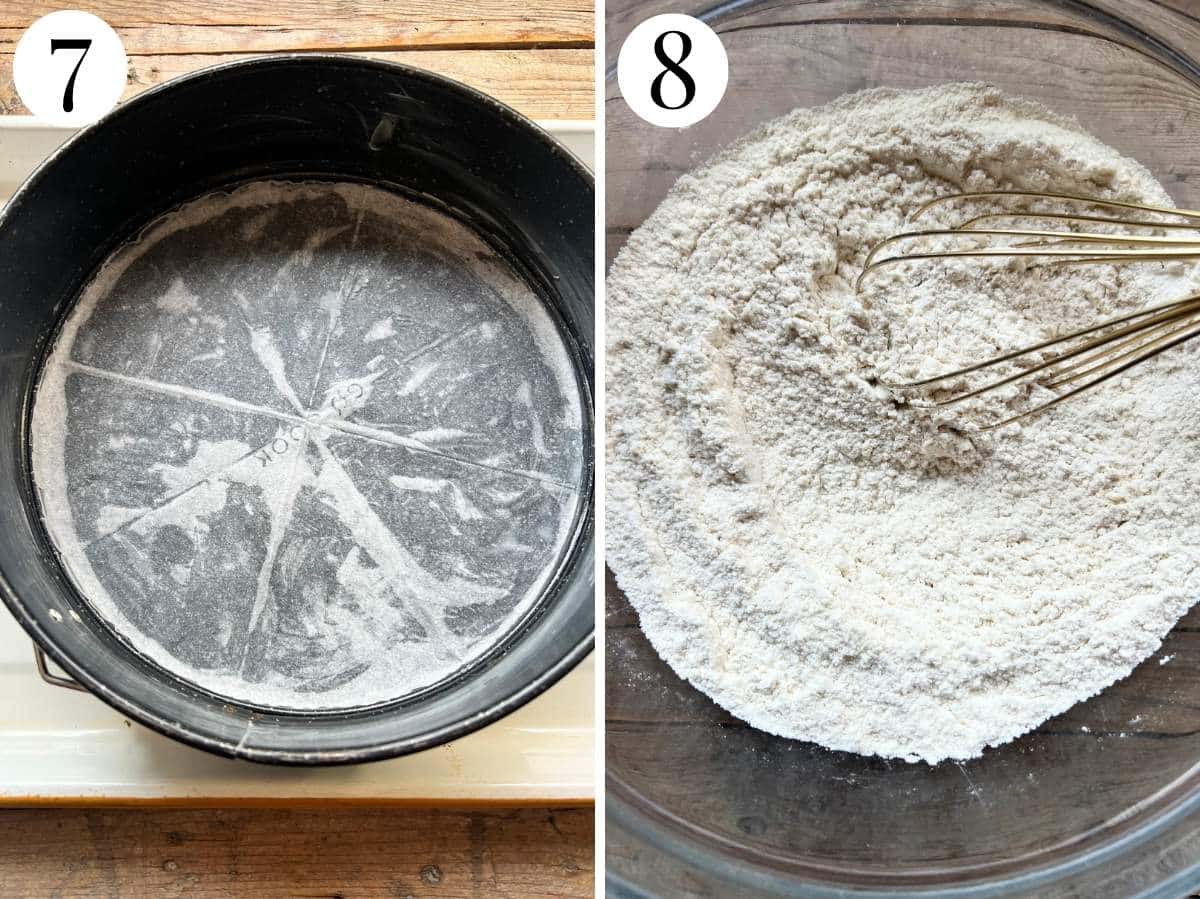
- Preheat the oven to 180C (350F) static (non-fan oven). Grease your cake pan with butter and line the bottom with parchment paper. Place the cake pan on a baking tray and set aside (photo 7).
- Melt the butter in a saucepan and let it cool (warm is fine, just not hot). Warm the milk in a separate saucepan so it’s not fridge cold; it should be tepid and not hot.
- Add the flour and baking powder to a bowl and give it a quick whisk to aerate it (photo 8).
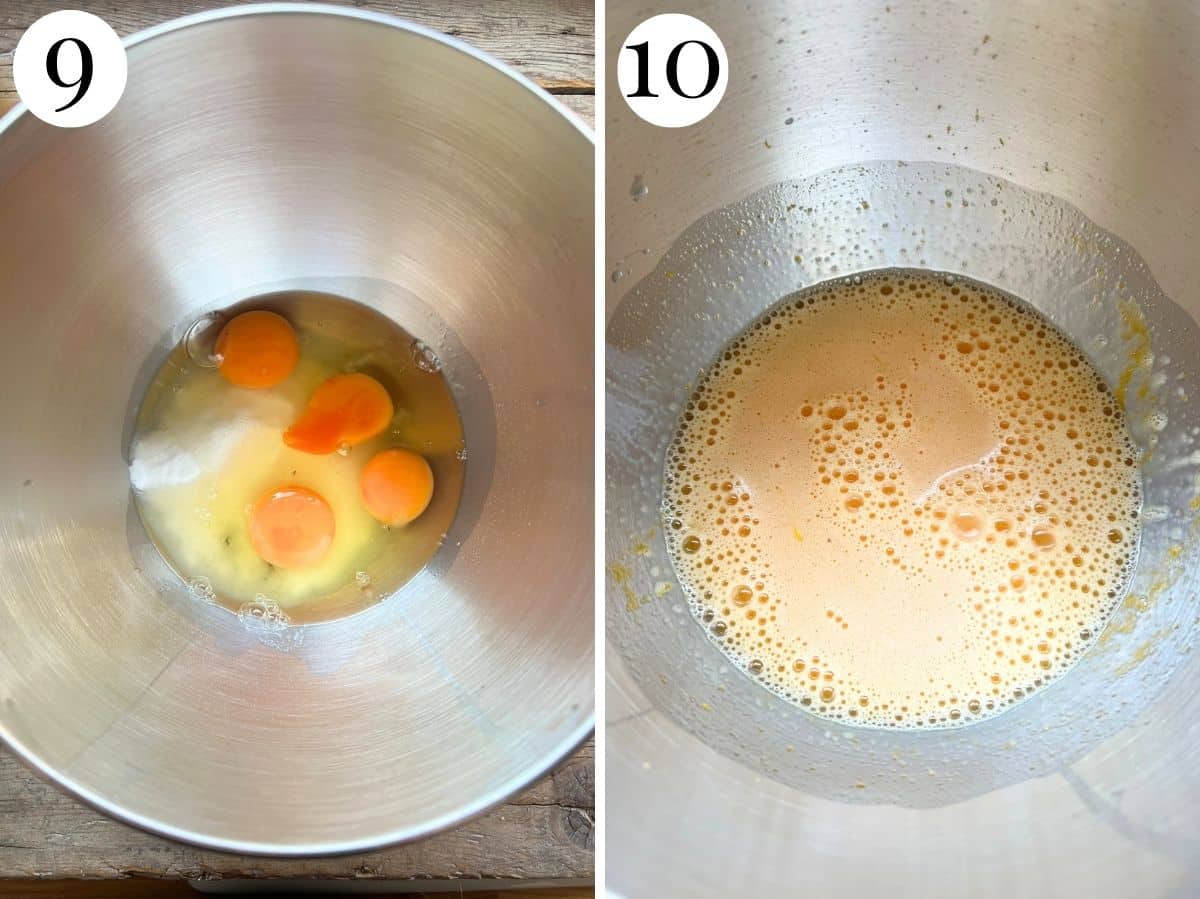
- Put the eggs, sugar and lemon zest to a the bowl of a stand mixer (or use a large mixing bowl and an electric hand whisk). Beat with the whisk attachment on medium speed. Once the mixture combines, continue to beat it for 2 minutes; it should be frothy (photos 9 and 10).
- Next, add the melted butter and whisk it in, followed by the milk.
- While whisking, add the flour and baking powder a spoonful at a time until it is all used up. Whisk for a few seconds until thoroughly combined (make sure to scrape down the sides of any excess flour and whisk it in) (photo 11).
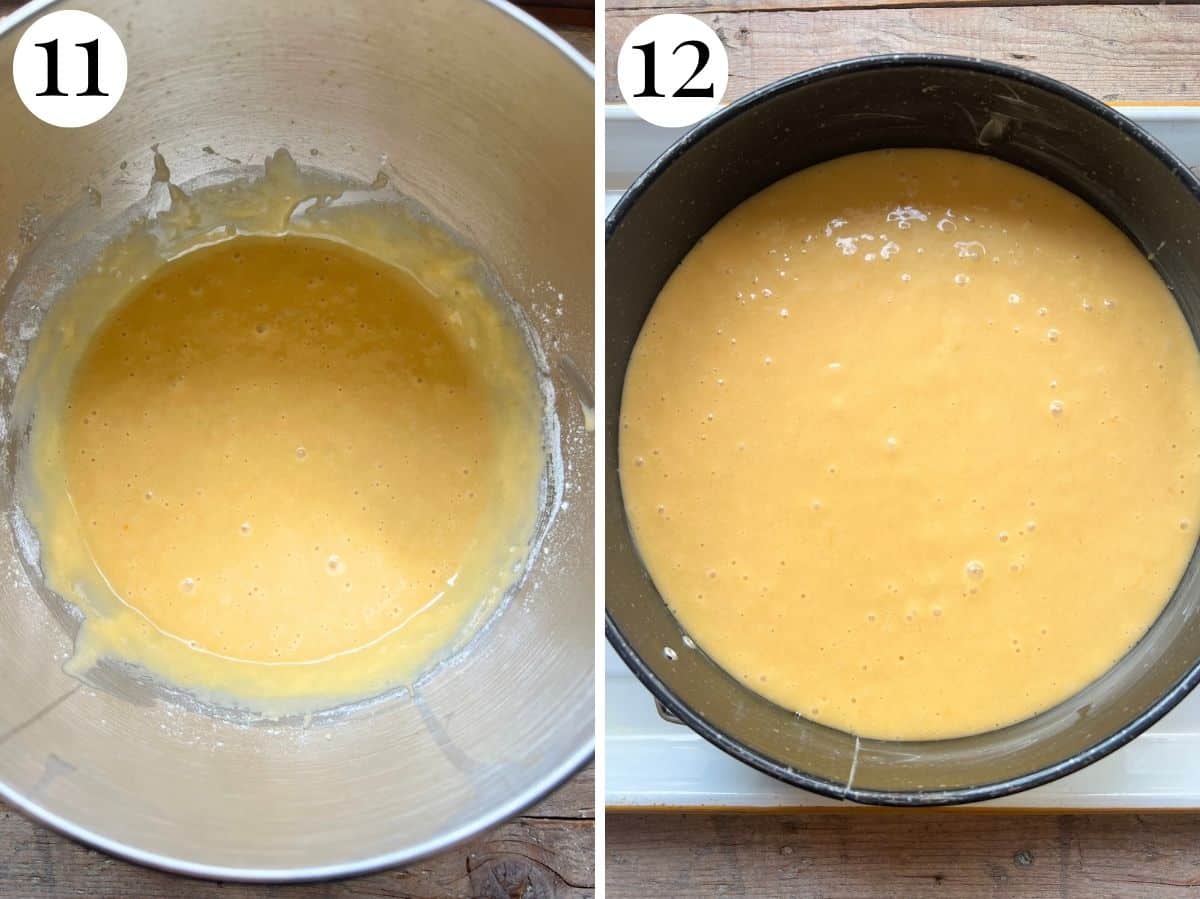
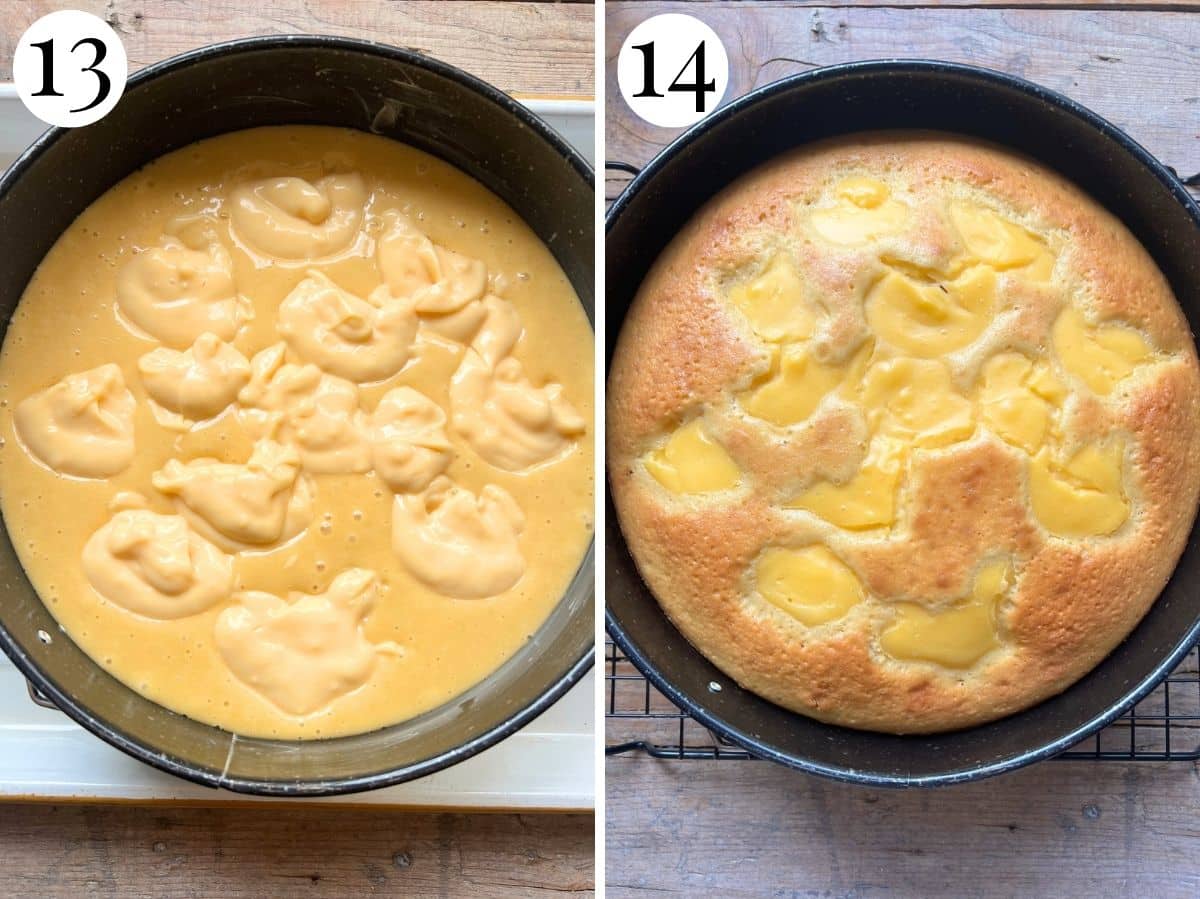
- Pour the batter into your prepared cake pan, then dollop over spoonfuls of pastry cream. I use roughly 2 tablespoons of pastry cream per dollop and place them in a circle around the outside, then in the middle (photos 12 and 13).
- Bake in the oven for 35 minutes (check with a skewer inserted into the sponge). Remove from the oven and let it sit for 10 minutes before removing the springform ring (if using) (photo 14).
- Once completely cool and just before serving, dust some powdered sugar over the top, cut into slices and serve.
Notes
- Use a kitchen scale: although I have provided US cup measurements which I have measured myself during the testing process, I’ve found that this cake isn’t very forgiving of any incorrect measurements, so I highly recommend that you use a kitchen scale.
- Milk and butter temperature: make sure both the melted butter and milk are either warm or at room temp. Don’t put hot liquid into the cake.
- Cooling the pastry cream: It’s ok to use warm pastry cream but again not piping hot, so I recommend cooling the pastry cream for at least 20-30 minutes before using.
- Storage: The cake will keep well in a cool place, out of direct sunlight, for up to 2 days, then should be refrigerated. Cakes can dry out in the fridge, so the cake is at its best in the first 1-2 days.
- I don’t recommend freezing.
Helpful Info for All Recipes
- I always use extra virgin olive oil in all of my recipes unless stated otherwise
- When I use canned or jarred tomatoes of any kind I always use Cirio or Mutti brands for the best results and flavour.
- All vegetables are medium sized unless stated otherwise
- All recipes are tested and developed using a fan (convection) oven
- Find out more about how nutrition is calculated.
- Check out our must have Italian Pantry Staples.
- You can also find all our Essential Kitchen Tools for Italian Cooking.
Nutrition
Nutrition information is automatically calculated, so should only be used as an approximation.










Can I substitute a nut milk for whole milk in the recipe? Thanks! LOVE your recipes!!
Hi Lark, I’ve never tried using nut milk, so I’m not entirely sure. I think it’s fine to use almond milk to make pastry cream, but you may need to add more cornstarch to help thicken it. Let me know how it goes!